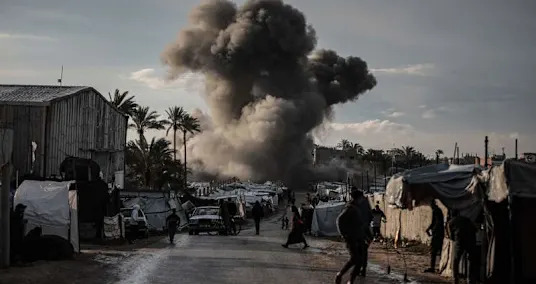
The Israeli army said on Monday that it struck what it called an "armed Hamas terrorist cell" in the Gaza Strip and "eliminated" it, with medical sources on the ground reporting three killed in the attack.
The incident, in the north of the territory, also produced injuries, some serious, the sources said, adding that a group of people was struck. The Israeli army said the cell posed a threat to Israeli soldiers. None of the details could initially be independently verified.
A ceasefire in the Gaza war between Israel and the Palestinian militia has technically been in place since October 10. Nevertheless, fatal incidents continue to occur, with both sides accusing each other of violating the agreement.
Since the ceasefire came into effect, more than 700 people have been killed in Gaza, according to the Hamas-controlled health authority.
Palestinians have been killed in Israeli shelling almost every day in the past week, according to Palestinian sources.
Israel frequently justifies the attacks by claiming that the individuals threatened Israeli soldiers or entered areas under its control. Several Israeli soldiers have also been killed in attacks since the ceasefire began.
LATEST POSTS
- 1
 In Antarctica, photos show a remote area teeming with life amid growing risks from climate change
 - 2Climate change is straining Alaska's Arctic. A new mining road may push the region past the brink
- 3AI’s errors may be impossible to eliminate – what that means for its use in health care
- 4Discovery of massive spider's web in Greece reveals unexpected behavior
- 5Cocoa Prices Settle Lower on Expectations of Adequate Supplies


- ADHD drugs work, but not the way experts thought
- Instructions to Comprehend and Use Open Record Extra Offers
- Find the Effect of Web-based Entertainment on Psychological wellness: Exploring the Advanced Scene Securely
- Vote in favor of Your #1 4\u00d74 SUVs
- New portrait of the oldest-known supernova | Space photo of the day for March 27, 2026
- Everyone knows F1 is for the girls. I wandered into the Las Vegas desert to find out why.
- ‘Grit’ and relentless perseverance can take a toll on brain health − particularly for people facing social stresses like racism
- Canada's Serene Lakeside Mountain Village Is A Breathtaking Oasis For Outdoor Adventure
- Bismuth’s haredi draft bill won’t change enlistment, IDI expert tells 'Post'