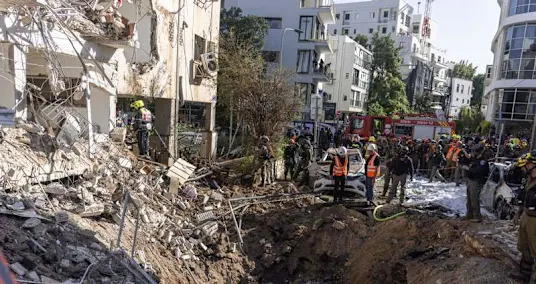
Iranian missile attacks on Israel struck several locations in the greater Tel Aviv area on Thursday morning, according to the Israeli military.
Six people were injured in the predominantly Arab town of Kafr Qasim, east of the coastal city, Israel's Magen David Adom emergency service said.
Emergency crews arrived within minutes of the impacts and found significant damage to a building, with injuries caused by the blast wave, a medic said. The wounded were treated at the scene before being taken to hospital.
Additional rocket fire targeting the Tel Aviv area was reported from Iran as well as from Lebanon overnight, according to local media.
Iran fired five waves of missiles towards Israel over the course of some two hours on Thursday morning, according to military sources.
Sirens sounded in numerous areas of Israel, including the Tel Aviv area, Jerusalem and the north of the country, with impacts reported in several locations, according to the army and emergency services.
LATEST POSTS
- 1
 Planet-eating stars hint at Earth's ultimate fate
 - 2Nestlé says 413,793 KitKat candy bars stolen en route from Italy to Poland
- 3Holiday weather forecast: Where travelers can expect a wintry mix, flooding and record warmth across the U.S.
- 47 Powerful Methods for forestalling Telephone Overheating: Keep Your Gadget Cool
- 5Spots To Go Birdwatching All over the Planet




- 7 Fast Approaches to Let loose Space on Your Telephone in a flash
- Accomplishing Balance between fun and serious activities: Procedures for a Better Life
- NASA Artemis II tracker: Crew less than 60,000 miles from moon ahead of Monday flyby
- Agricultural drones are taking off globally, saving farmers time and money
- Satellite data reveals a huge solar storm in 2024 shrank Earth's protective plasma shield
- Iranian president warns of retaliation against Gulf states
- Over 60 local leaders push Netanyahu to halt haredi draft bill, warn of social rift
- Figure out how to Arrange a Fair Settlement with the Assistance of a Fender bender Legal counselor
- Most loved Caf\u00e9 Chain: Where Do You Get Your Caffeine Fix