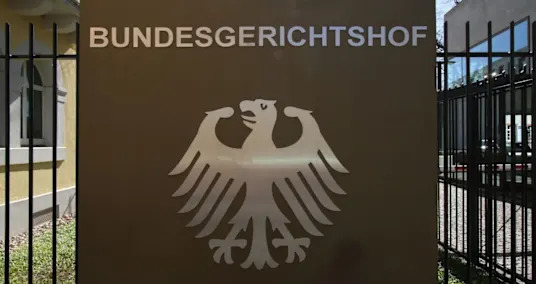

A landmark climate lawsuit aimed at forcing BMW and Mercedes-Benz to stop selling combustion engine cars by 2030 has failed in Germany’s top civil court, handing the country’s auto industry a consequential legal win at a moment when the future of ICE vehicles remains anything but settled.
The decision, issued by Germany’s Federal Court of Justice in Karlsruhe, does not change the broader trajectory of Europe’s emissions rules. But it does make one thing clear: German courts are not prepared to order automakers to phase out combustion engines earlier than lawmakers have required.
Inside the Climate Case Against BMW and Mercedes-Benz

The suits were brought by three Deutsche Umwelthilfe (DUH) managing directors. The cases against BMW and Mercedes-Benz were heard by the Federal Court of Justice, known in Germany as the Bundesgerichtshof, or BGH, after lower courts in Munich and Stuttgart had already ruled in favor of the automakers.
DUH’s argument was ambitious. The group said that continuing to sell new combustion engine vehicles beyond 2030 would consume too much of the remaining carbon budget and, in effect, shift the burden of emissions cuts onto younger generations, potentially limiting their freedoms. The legal theory leaned heavily on Germany’s landmark 2021 Constitutional Court climate ruling, which found that the state has a duty to protect fundamental freedoms by not pushing disproportionate climate burdens into the future.
That earlier case was a turning point in German climate law and influenced wider European climate litigation debates. DUH tried to extend that logic from the state to private companies, arguing that major automakers should be prevented from continuing business practices that would worsen the climate burden later on.
What Germany’s Top Court Decided
The BGH said no. In dismissing the claims, the court held that private individuals cannot demand that BMW or Mercedes-Benz stop placing new combustion engine passenger cars on the market ahead of the deadlines set by European law. Presiding judge Stephan Seiters of the court’s Sixth Civil Senate said the companies’ conduct did not legally impair the plaintiffs’ rights in a way that would justify the outcome they were seeking.
The court also rejected the idea that there is a judicially enforceable carbon budget for individual companies under the plaintiffs’ theory. That point goes to the heart of the case. DUH had tried to argue that BMW and Mercedes-Benz were effectively using up too much of Germany’s remaining emissions space. The court’s response was that climate legislation and sector targets are matters for lawmakers, not something civil judges can independently reassign to specific manufacturers.
LATEST POSTS
- 1
 Unfathomable and Entertaining Legal disputes That Surprise everyone
 - 2Polish law aimed at lowering petrol prices takes effect on Tuesday
- 3Which European countries have mandatory or voluntary military service
- 4Top 10 Smash hit Computer games of the Year
- 5Millions in JDM Exports and Exotic Supercars Are Currently Trapped at Sea




- A definitive Burger Confrontation: Which One Rules?
- The year's first meteor shower and supermoon clash in January skies
- Journeys That could only be described as epic: Delightful Voyage Lines All over the Planet
- 13 must-see moon events in 2026: Eclipses, supermoons, conjunctions and more
- The EU Is Considering Lifting Tariffs on Chinese Electric Vehicles
- There are thousands of aligned holes in Peru. Archaeologists now think they know who made them
- Becoming the best at Discussion: Individual Procedures
- Unpaid caregiving work can feel small and personal, but that doesn’t take away its ethical value
- The Way to Fruitful Weight reduction: Individual Wellbeing Excursions


